

More conditions, same system
Diabetes Foundations is the first course. The same six-pillar model can support future education for PCOS, autoimmune conditions, and GLP-1 care.
PCOSAutoimmuneGLP-1 support
Berine is led by Tina Alexander RDNRegistered Dietitian Nutritionist, CDCESCertified Diabetes Care and Education Specialist, whose clinical experience shapes practical education for the long-term work of metabolic health. That teaching is built to work outside the practice it came from.
Berine creates practical, evidence-based education for the long-term work of metabolic health. We are starting with Diabetes Foundations, built for those living with all types of diabetes and available by direct enrollment when it opens.
See the course
A new diabetes diagnosis often comes with instructions but little time to understand how those instructions fit together. Patients need clinically reliable guidance they can use in daily life, especially in the weeks after diagnosis when questions move from the appointment into meals, medication, movement, and sleep.
Diabetes Self-Management Education and Support (DSMES), recognized by the ADA and ADCES, is designed for that work. In insured cohorts, fewer than 7% of adults newly diagnosed with type 2 diabetes participate during the first year. Berine is building direct-pay education for people who need a structured next step after the appointment.
Sources: CDC National Diabetes Statistics Report, reviewed January 2026 (2023 data). DSMES participation (first-year, insured cohorts): Li et al., MMWR 2014; Strawbridge et al., Health Educ Behav 2015. Diabetes distress (type 2): Perrin et al., Diabetic Medicine 2017.
Tina has worked at four levels of diabetes care.
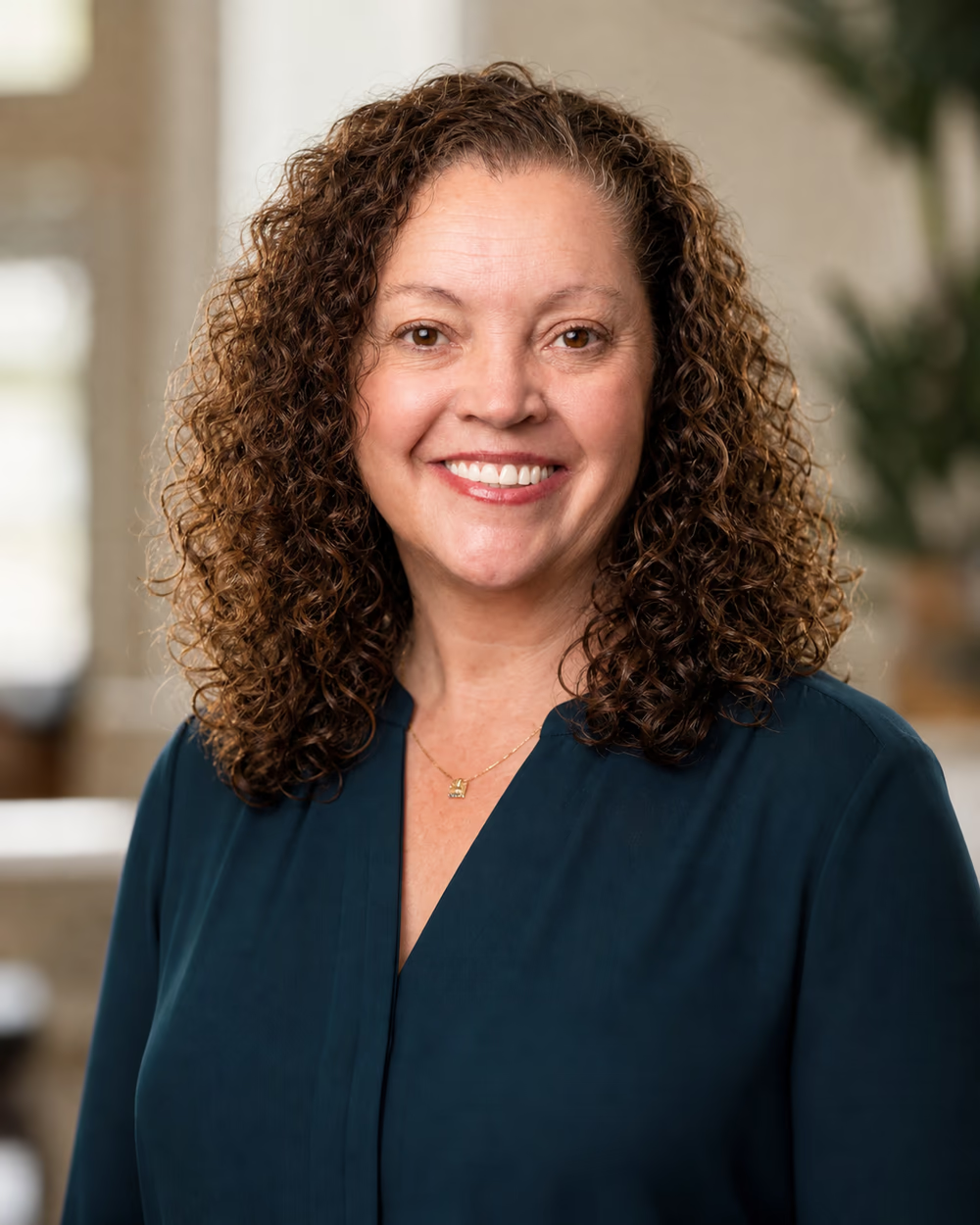
Tina Alexander is a problem-solver at heart. That drive defined the start of her clinical career in rural hospitals, troubleshooting complex cases, untangling care gaps, and making resources work where they were needed most.
She founded Integralife to bring that same focus to private practice, building an ADA-recognized diabetes self-management program that has cared for more than 2,500 patients. Today, as VP at Rapid Trials, she embeds dietitians into clinical trials where new therapies originate. Combined with her national credentialing leadership with the CBDCE, this multi-level expertise is the foundation Tina built directly into Berine.
I am not your doctor. I’m not your drill sergeant. We’re here to improve your health, at whatever rate you’re willing to go at.
Our framework has six pillars: Nutrition & Hydration, Movement & Recovery, Sleep & Circadian, Mind & Connection, Substances & Therapeutics, and Signals & Interoception. Each stands on its own, and the skill we teach is reading how they interact as one system.
Read the six pillarsThese commitments define how Berine authors, prices, reviews, and extends its education.
Every course module is authored to meet the credential standards of an ADA-Recognized DSMES program.
Tina Alexander, a registered dietitian and certified diabetes care and education specialist, writes the curriculum, so the teaching standard matches the people who deliver diabetes education in clinical settings.
Berine is designed to carry the same teaching beyond a single practitioner's calendar.
The course and its software bring the teaching home. The work can be used in more than one place at once.
Berine is designed to work alongside each patient's healthcare team.
When enrollment opens, the price is $129, one-time.
Anyone can enroll directly, so patients who fall through referral cracks can still take the course. Professional services are priced separately.
Tina authors and validates every module, and every recommendation traces back to the evidence behind it.
Unbiased, evidence-based education, completely free from vendor sponsorships, supplement sales, or device affiliate commissions. Modules are re-checked against current standards of care and revised when the guidance changes.
Berine is short for berberine, a compound from the barberry plant.

Berberine is one of the oldest plant medicines used for blood-sugar problems, long before anyone had the language for insulin resistance. People did not have that language. They just knew the plant did something for the sugar problem.
Insulin helps glucose move from the bloodstream into cells for energy. In type 2 diabetes, the body may not make enough insulin or use it effectively, so more glucose remains in the blood. Insulin resistance is one part of that process, alongside genetics, beta-cell function, environment, and other factors.
Insulin sensitivity is one useful lens for understanding metabolic health. Food, sleep, movement, stress, medication, and other factors can affect glucose regulation in different ways. The six-pillar framework helps people see those relationships together.
That history gave Berine its name. It also points toward a broader commitment: clinical education designed to travel, grounded in current evidence, and built to serve more people over time.
The name gives the work room to grow beyond one person.
The six-pillar system behind Diabetes Foundations is the basis for Berine’s next work.
Diabetes Foundations is the first course. The same six-pillar model can support future education for PCOS, autoimmune conditions, and GLP-1 care.
PCOSAutoimmuneGLP-1 support
Berine is exploring how practices, community health centers, and employer programs could use structured education in the first weeks of care.
Independent practicesCommunity healthEmployers
See partnership optionsBerine aims to add language access, regional pricing, and scholarships so more patients can use the same course.
LanguagesRegional pricingScholarships
Join the waitlist for the first patient course, or bring our clinical team into your practice.