


One phrase, several missing facts
“Patient noncompliant.”
The phrase is short enough to fit any chart. That is part of its appeal and part of the problem. It leaves the next clinician guessing about which dose was missed, how often it happened, whether the medication was affordable, what the person understood, or whether the regimen fit the life it was supposed to enter.
In a packed clinic, shorthand happens. By the time the same topic has returned across several visits with A1C still above target, everyone in the room may be tired. Writing a character judgment at that moment does very little for the handoff.
A more useful note begins with the action, then keeps the clinical question open.
What, exactly, became hard?
The chart can carry a judgment forward
The joint ADA and AADE language report reached a clear consensus in 2017: “compliant,” “noncompliant,” “adherent,” and “nonadherent” frame diabetes self-management as obedience. The report recommended neutral descriptions of actions and physiology. The current ADCES language guide uses examples such as how often a medication is taken or whether cost limits access.
That extra detail helps the next clinician decide what to ask. It can also keep an assumption from hardening as it moves through the record. In a single-center study of 48,651 admission notes, stigmatizing language appeared in 6.9% of notes about people with diabetes and appeared more often in notes about non-Hispanic Black patients. The study was cross-sectional, so it cannot tell us why the disparity occurred or what changing the language would do to outcomes.
A randomized chart-note study offers a narrower warning. Physicians in training who read a stigmatizing note about the same hypothetical patient reported more negative attitudes, and residents selected less intensive pain treatment. That study involved sickle cell disease rather than diabetes. Diabetes notes are read the same way, and words in one note can shape the reader of the next.
One chart signal can have several causes
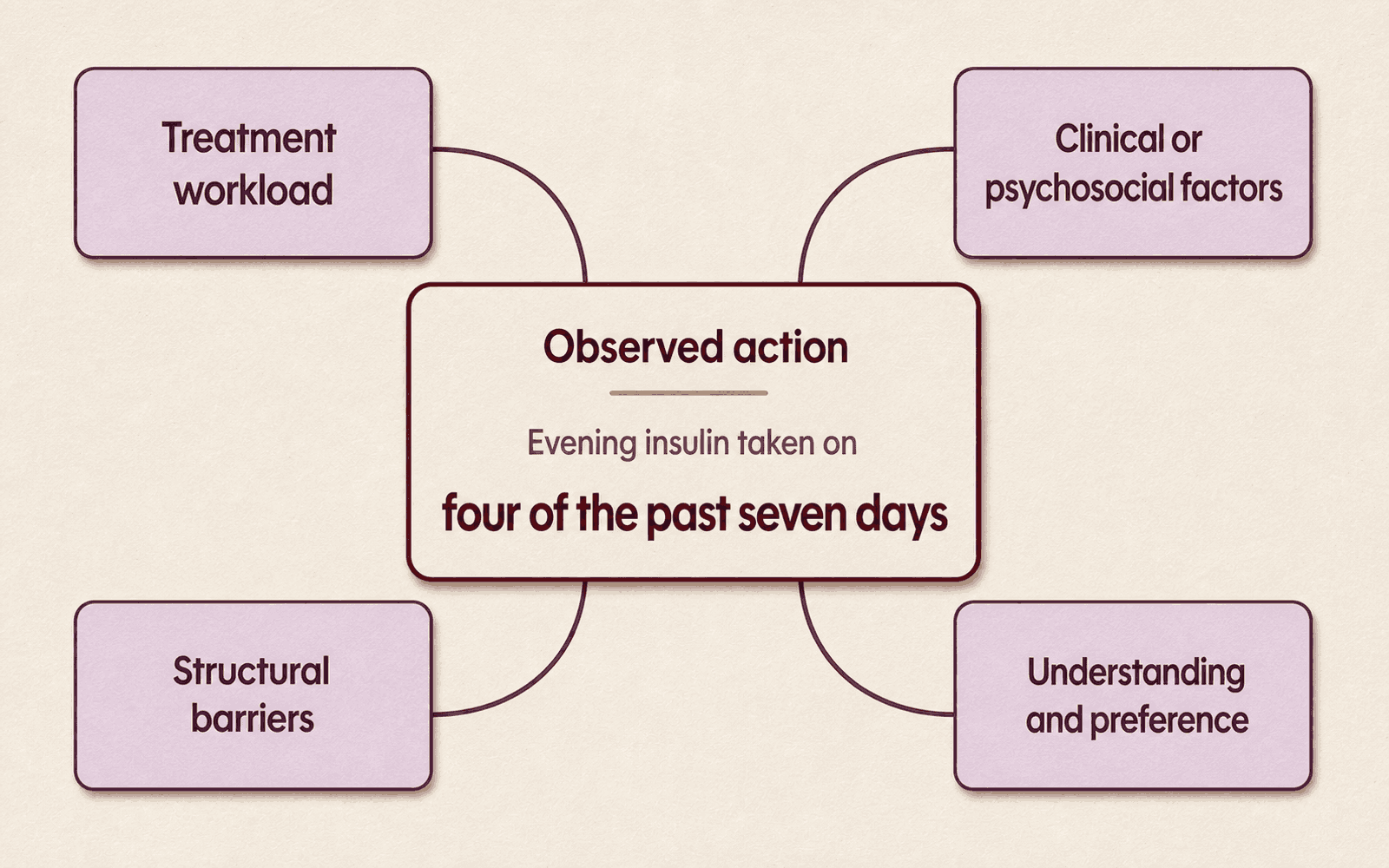
Suppose the observed fact is that evening insulin was taken on four of the past seven days. That fact matters, and the cause is still open.
- Treatment workload: The schedule may require repeated, time-sensitive steps during an unpredictable shift. Side effects, alarms, supplies, device tasks, or refill logistics can add more work.
- Clinical or psychosocial factors: Hypoglycemia fear, diabetes distress, depression, pain, vision or dexterity changes, cognitive change, ADHD, and limited health literacy can each change what a regimen asks of a person.
- Structural barriers: Cost, coverage, transportation, pharmacy supply, food or housing insecurity, language access, work rules, and caregiving demands may leave very little room for the prescribed task.
- Understanding and preference: The person may have understood the recommendation and chosen a different course. They may also hold a concern that the visit never surfaced.
Several of these can be present at once. “Noncompliant” cannot distinguish among them. Neither can a more polite substitute such as “poorly engaged.” The chart needs the observed behavior and the context the person reports.
Diabetes care competes for the same resources as daily life
The work of diabetes extends far beyond taking a medication. People schedule appointments, arrange transportation, negotiate coverage, collect supplies, respond to readings, plan food, recover from disrupted sleep, and make decisions while working or caring for someone else. Those tasks draw from the same time, money, attention, physical energy, and social support that the rest of life requires.
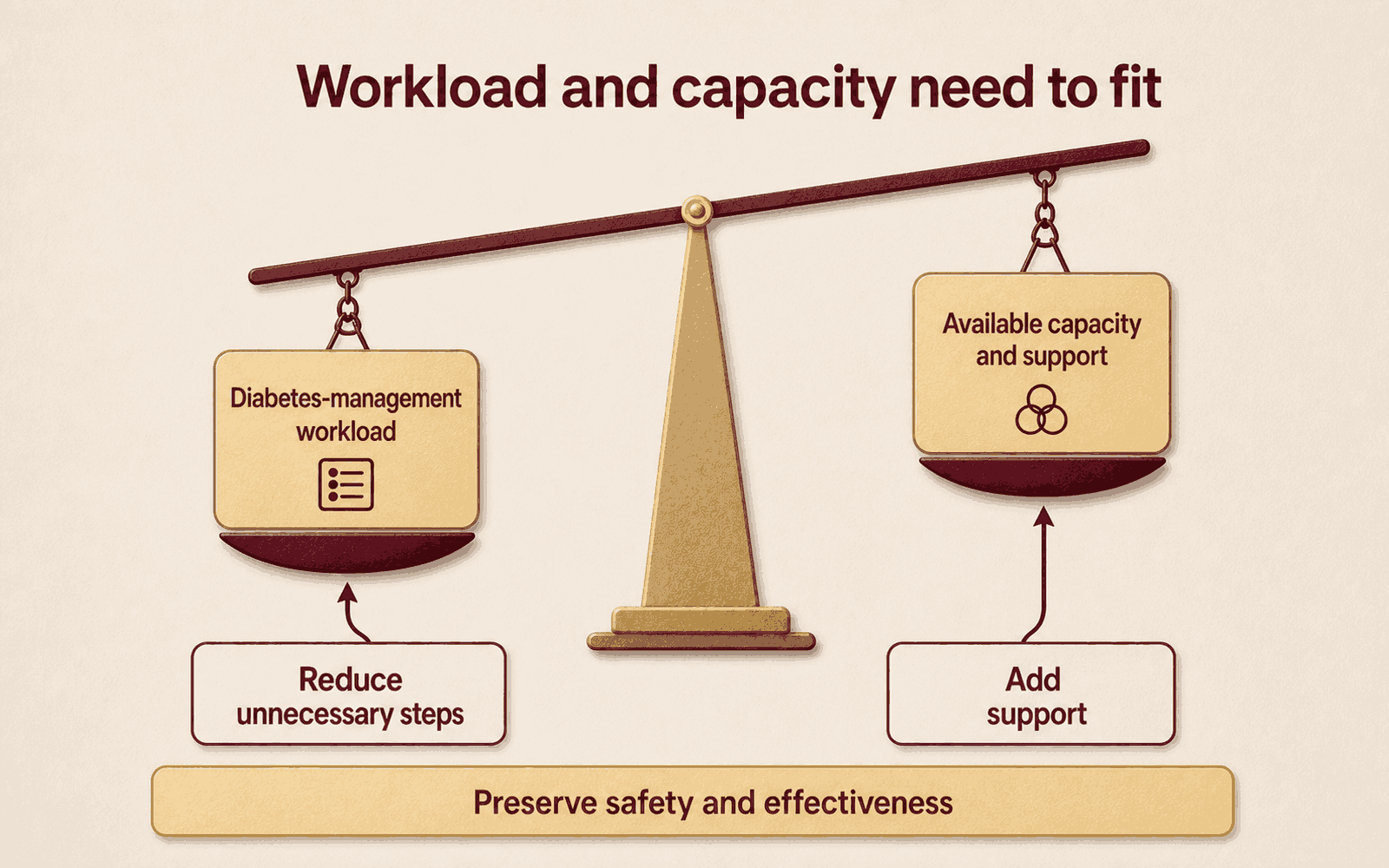
The treatment-burden literature describes this as a balance between workload and capacity. A qualitative study of 30 people with type 2 diabetes and 32 clinicians found burden in access to care and in complex medication regimens, and it found the same burden in changing daily routines. Clinicians in the same study described protocol rigidity, limited formularies, administrative work, and short visits that constrained what they could change. It was a small study in three Chilean health centers, so it gives useful texture rather than a national prevalence estimate.
For U.S. practice, the 2026 ADA Standards of Care tell teams to screen for functional, cognitive, financial, and logistical barriers, including signs that diabetes-management demands exceed available capacity and support. The response may involve reducing unnecessary steps, adding support, coordinating appointments, changing the education format, or selecting a clinically appropriate regimen with fewer repeated demands.
Any simplification still has to preserve safety and effectiveness. A 2025 rapid review of medication-regimen complexity found mixed glycemic results and mostly observational evidence. Some simplification approaches improved medication-taking, treatment satisfaction, or quality of life. The choice still has to preserve the benefit, monitoring, and safety the person needs.
Responsibility has limits and still requires a next step
Clinicians work inside formularies, visit lengths, staffing gaps, referral queues, prior authorization, and local resource shortages. A single visit cannot repair every condition that shapes diabetes care, and the care team still sets what happens once a mismatch is visible.
Start with safety. The 2026 ADA guidance on hypoglycemia and hyperglycemic crises provides the clinical frame. A report of daily hypoglycemia changes the agenda now. So does insulin rationing, recurrent ketones, an inability to keep food or fluids down, or a cognitive change that affects medication use. Assess the urgent risk, follow the appropriate clinical protocol, and document the escalation.
Then ask about the task in plain language. “Walk me through what usually happens around the evening dose” often yields more than “Are you taking this as prescribed?” Ask what the person hoped the treatment would do, what worried them, and which part was hardest to repeat. Use teach-back when understanding is uncertain.
The person may make an informed choice that differs from the recommendation. Record the preference, the options discussed, the material risks and benefits, and the agreed follow-up. Respectful language leaves room for agency without asking the clinician to call an unsafe choice safe.
Structural barriers also deserve a concrete response. A referral, benefits review, interpreter, pharmacy call, transportation resource, or care-manager handoff may help. When a resource is unavailable, documenting that fact keeps the barrier visible.
A barrier that outlasts the visit is a reason to involve a Diabetes Care and Education Specialist (DCES). DCES team members have the time and the specialized expertise this takes. They find what is blocking the plan, fit the self-management education to the person, guide the technology into the routine, and keep tuning the regimen with the patient as circumstances change.
What to write instead
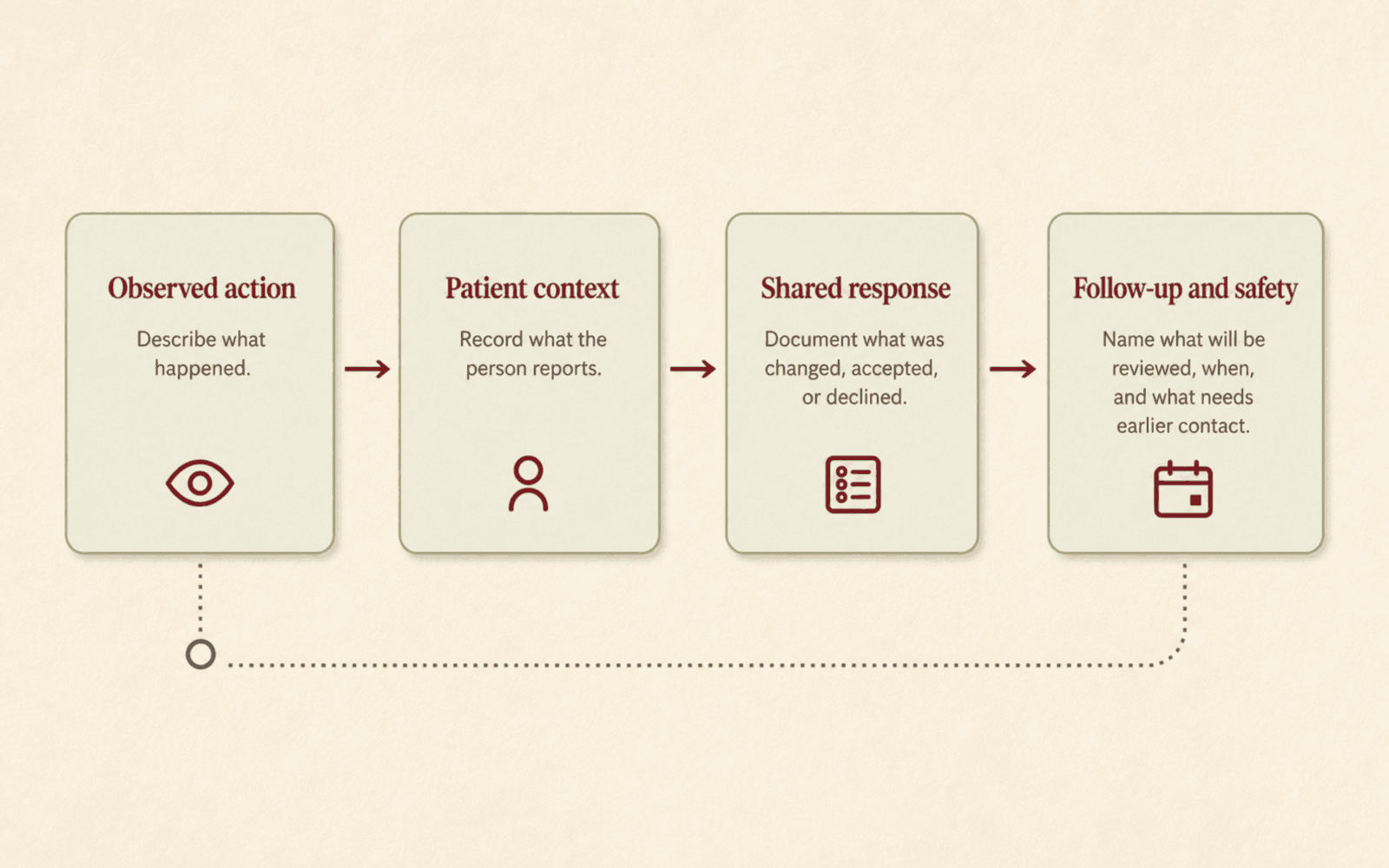
A concise note can carry four pieces of information. Adapt the detail to your scope, setting, and local documentation requirements.
- Observed action: What happened, how often, and over what period?
- Patient context: What explanation, goal, concern, preference, or barrier did the person report?
- Shared response: What did the person and care team change, accept, or decline?
- Follow-up and safety: What will be reviewed, when will it be revisited, and what calls for earlier contact?
Instead of: “Noncompliant with basal insulin.”
Document: “Reports taking basal insulin on four of the past seven nights. Evening doses are often missed during rotating shifts; reports current access to insulin and supplies. Patient and prescriber selected a timing plan compatible with the prescribed insulin and work schedule. Glucose data will be reviewed in two weeks; earlier contact advised for repeated low readings or persistent marked hyperglycemia.”
A second note might read:
“Meal boluses were entered after the meal on five of seven reviewed days. Patient reports losing track during caregiving tasks and worries about premeal dosing after two overnight lows. Referred to the Diabetes Care and Education team for pump/CGM workflow review and barrier identification before changing settings; patient used teach-back for the interim hypoglycemia plan. Reassess device data and the agreed workflow at follow-up.”
The replacement takes more space because it does more clinical work. It tells the next reader what happened, where the current theory came from, which action the team took, and what remains open.
Leave the next clinician a usable question
The chart is part of the care environment. It can preserve a verdict for years, or it can preserve the information that makes a better conversation possible.
When a diabetes task keeps breaking down, describe the pattern closely. Ask about treatment workload, health and cognition, structural conditions, understanding, and preference. Document the response that is feasible now and the point when the team will look again.
When the note carries the action, the context, the shared response, and what gets reviewed next, the next clinician can see what to adapt.
This article is educational and does not replace individualized clinical judgment, local documentation requirements, or emergency protocols.